
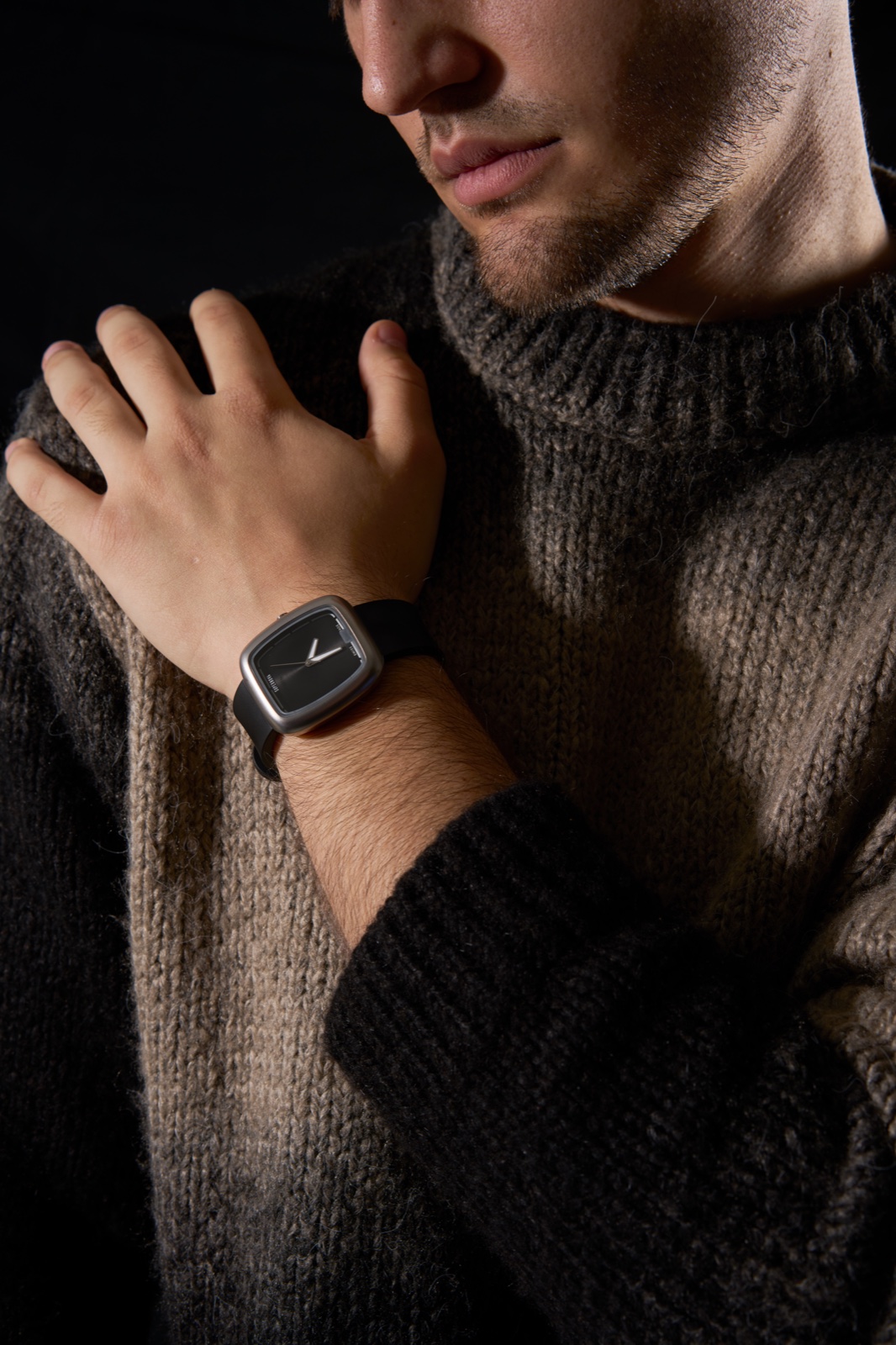
Supernova did not begin with a watch. It began with a question about the role a watch should play in the world as it is now: what it ought to protect, and what it might make possible. For a house that starts there, the object is never the first move. It is the answer.
The SN 2140 is the first answer. It sits, deliberately, between tradition and tomorrow: faithful to Swiss watchmaking, and unafraid of the questions the present is putting to it. The temptation, with a piece like this, is to lead with what is new. We have tried to resist it.
A watch, first.
The SN 2140 was never conceived as a technological demonstration. First and foremost, it is a watch. A cushion case in Grade 5 titanium, brushed, sandblasted and polished; a Swiss automatic movement of élaboré grade, turning at 28,800 vibrations an hour and visible through a sapphire caseback. Measured for the wrist at 36.5 by 40.7 millimetres and light at 43 grams, it was designed to find a natural balance rather than a masculine or feminine one.
The watch is not the starting point. It is the answer.
Only once the watch stands on its own do we talk about the other thing it carries: a discreet way to move value privately, with no screens and no interfaces. It took two years of research and industrialisation to make it disappear into the object, invisible to the naked eye and present only when the wearer wants it. The watch is worn, not operated.
A bubble of privacy on the wrist.
That is the feeling the SN 2140 is really about: a bubble of privacy on the wrist. Another way exists, and choosing it still counts for something. The watch stays silent until you open the door, and for many wearers that restraint is the boldest thing about it.
A finite run of 2,140 pieces per reference, individually numbered, assembled in Le Locle. Once allocated, that is the end of it. A small argument, in an age of disposable things, for making one worth keeping.